Dear Reader (2026-03-27 published simultaneously on FB),
This is the first of at least 3 posts centred around Rapa Nui, and it is a beverage post. So grab a coffee, a tea, a smoothie, a glass of wine, or a beer. This may take a while.
Where the Hell is Rapa Nui?
~ It is is a 5 1/2 hour flight and around 3,700 km west of Santiago.
~ Imagine a great big equilateral triangle covering the Pacific Ocean. Each side of the triangle is roughly 7,000 km long. The western edge stretches from the Auckland, NZ to Honolulu and the most eastern corner of the triangle is Rapa Nui.
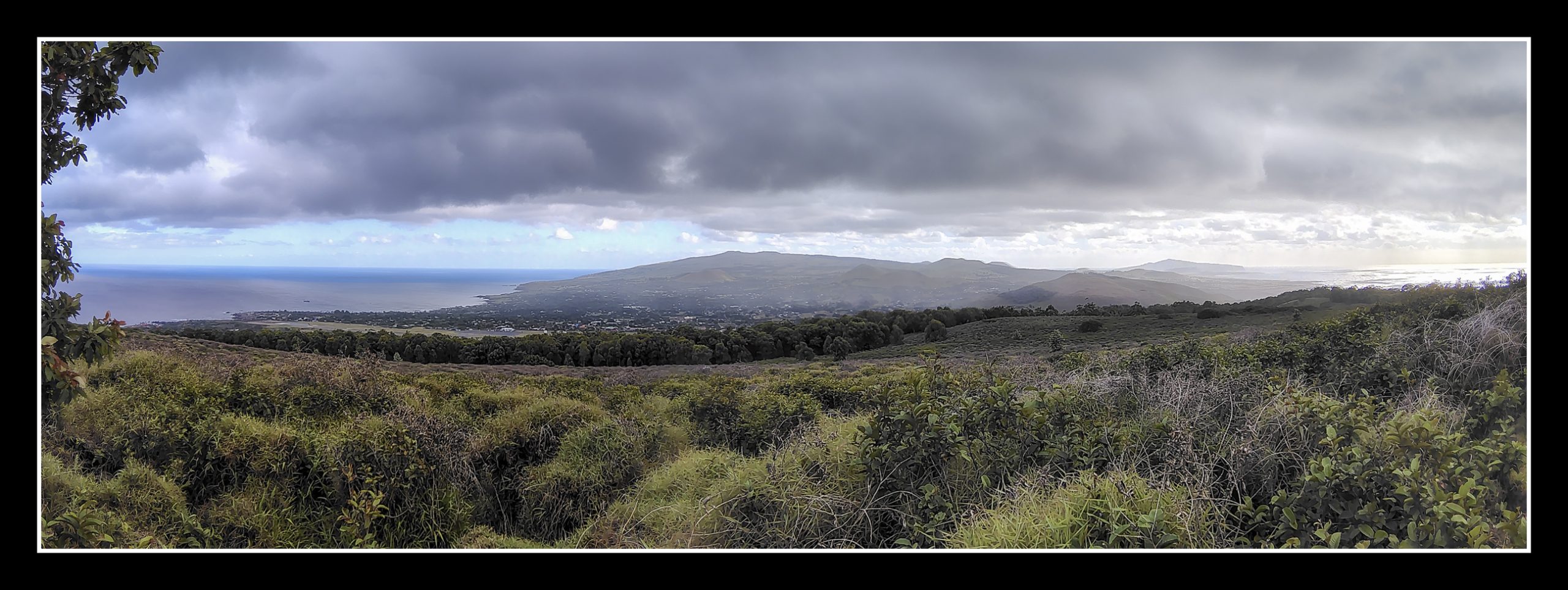
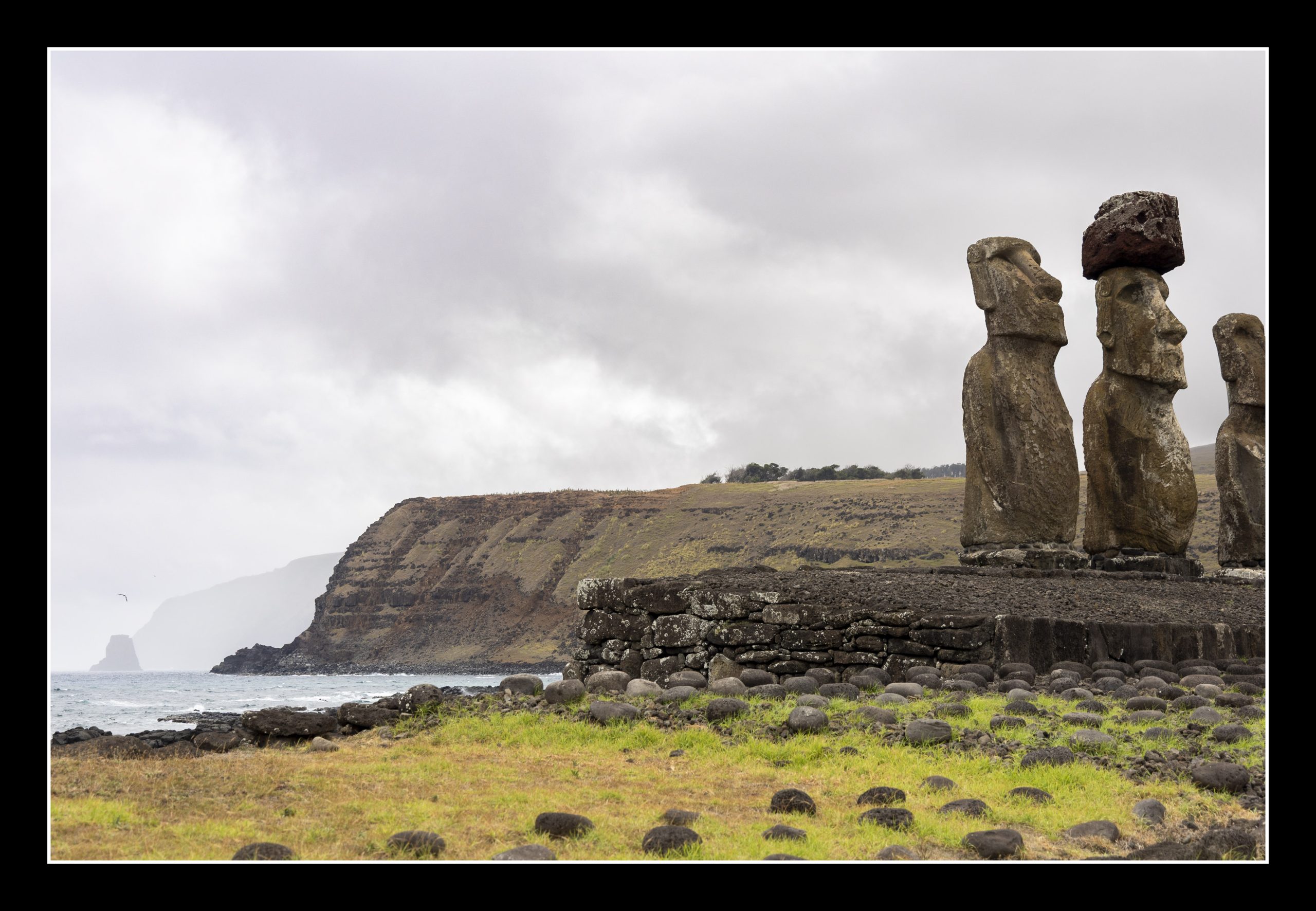
~ Speaking of triangles, Rapa Nui can be thought of as wide based isosceles triangle with an extinct volcano at each corner of the triangle. At its longest the island measures over 23 km, and at its widest it is over 11 km. Total area is less than 165 km2.
Population
~ The one town on the island is called Hanga Roa, and most of the island’s 10,000 (or so) population live there.
National Park
Most of the island’s shoreline is part of a National Park, which is where most of the moai (see below) can be found. All visitors to the National Park must be accompanied by a guide. My travelling companion and I hired a guide for two full days to take us around the island. That same guide, also took another person and I on a stunning 17 km walk along the island’s north shore into a part of the island that few see because it is only accessible by foot (more of this walk in a later post).
My Brief and Incomplete History of Rapa Nui
The island was initially settled somewhere between 800 CE and 1200 CE. These initial settlers were Polynesian, and not South American as Thor Heyerdahl hypothesized and tried to prove on his Kon Tiki expedition. Polynesians were and are incredible seafarers as demonstrated by the boat Hōkūleʻa (1) and its crew that use traditional techniques of navigation (waves and stars but no sextant).
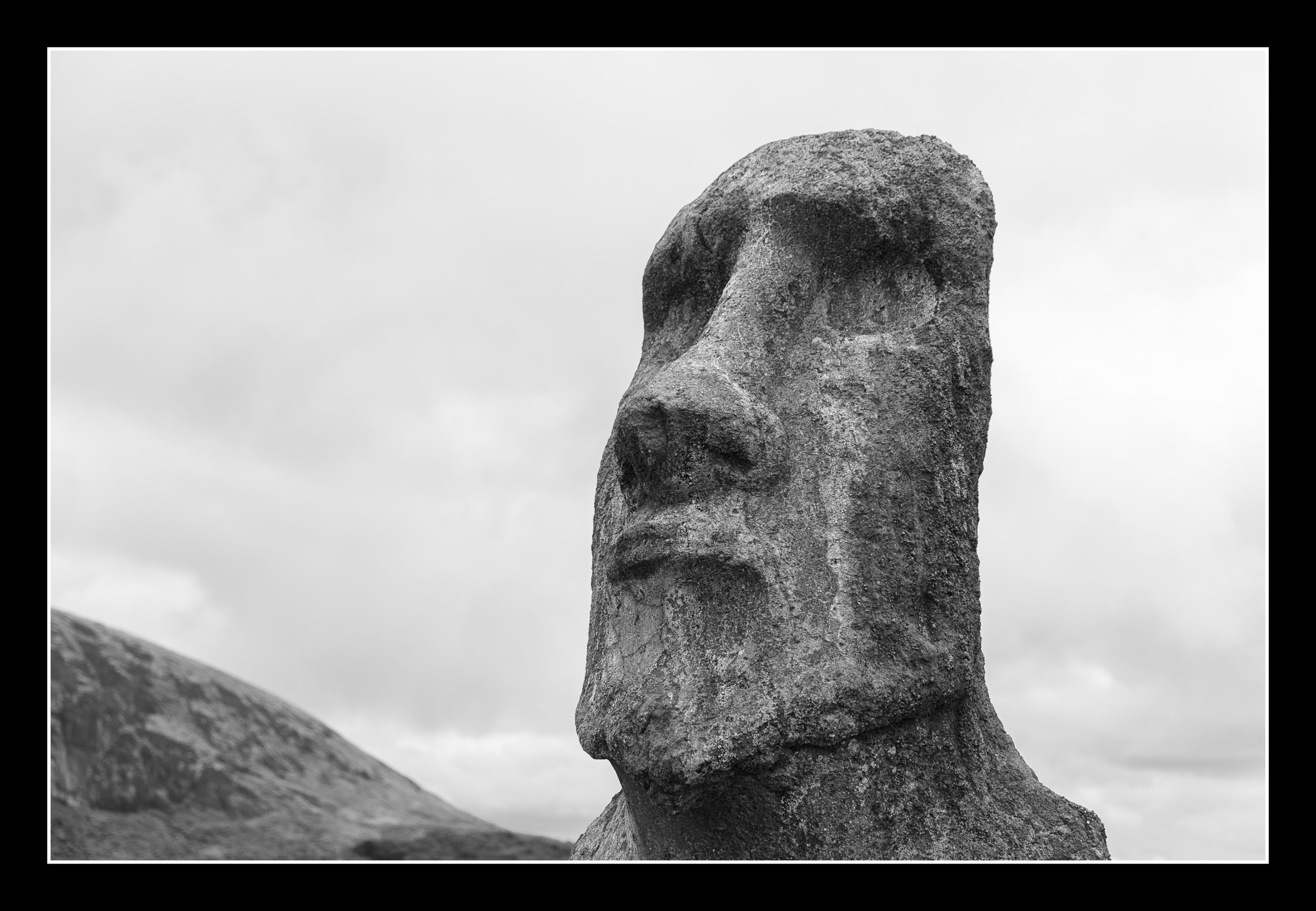
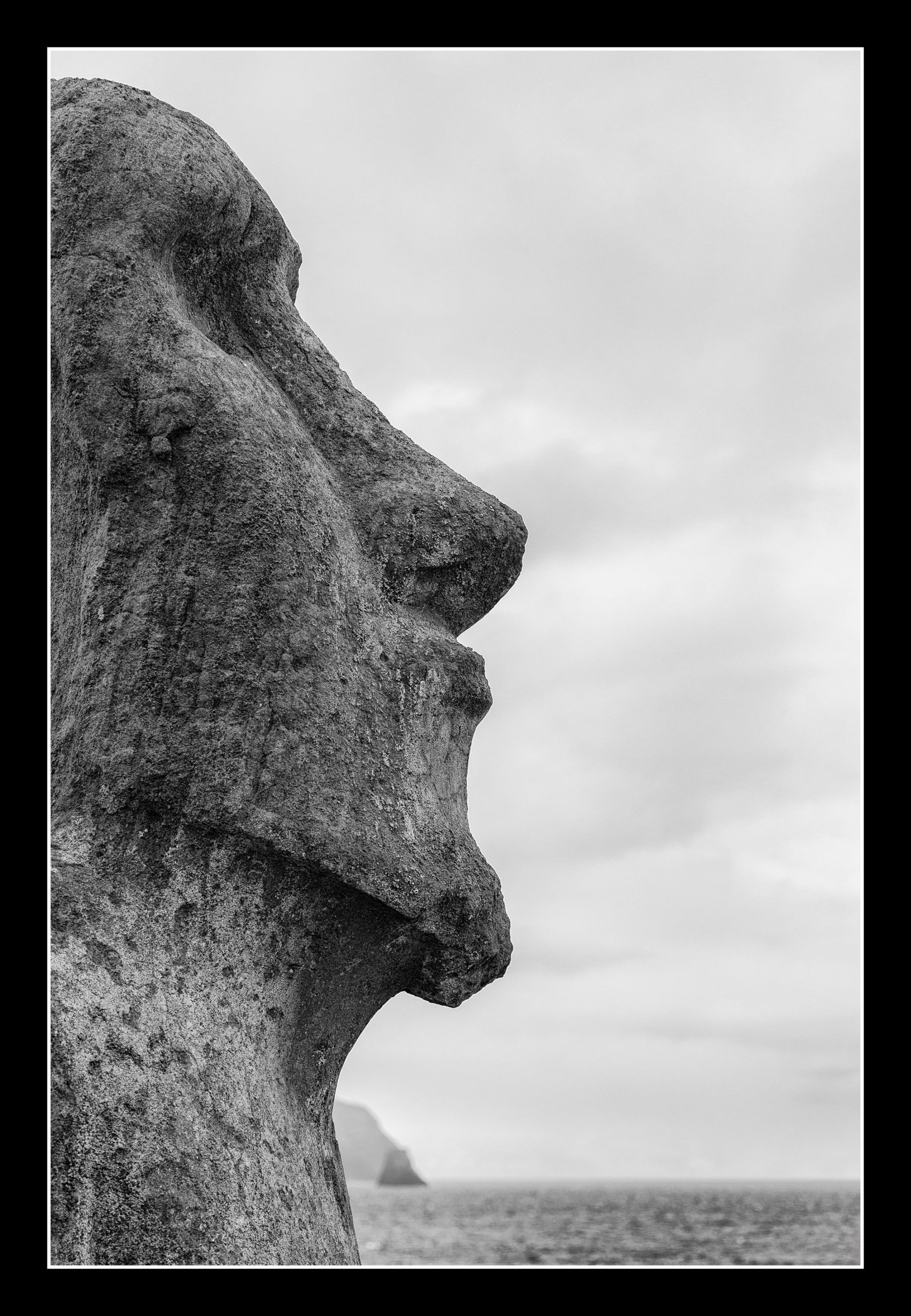
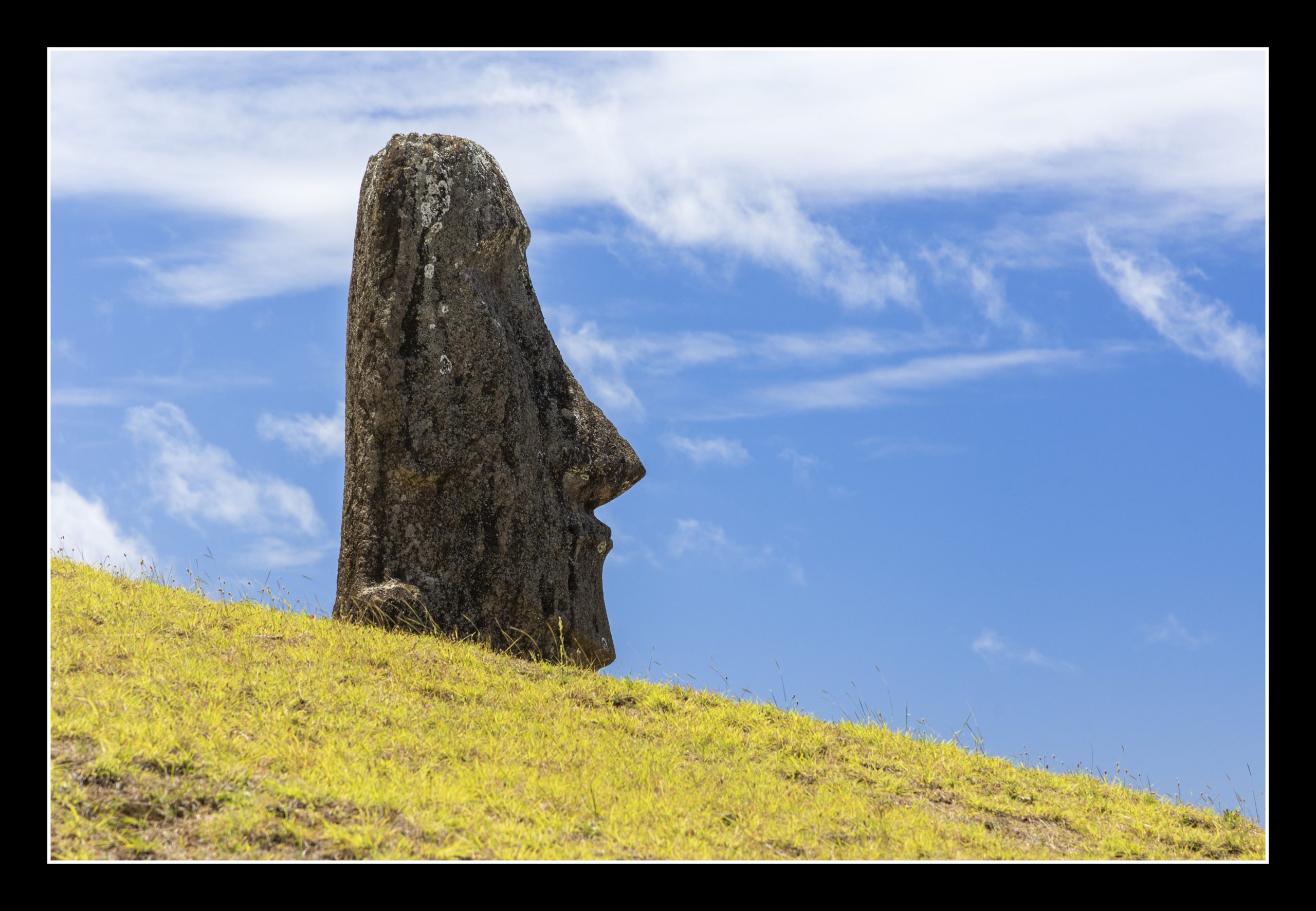
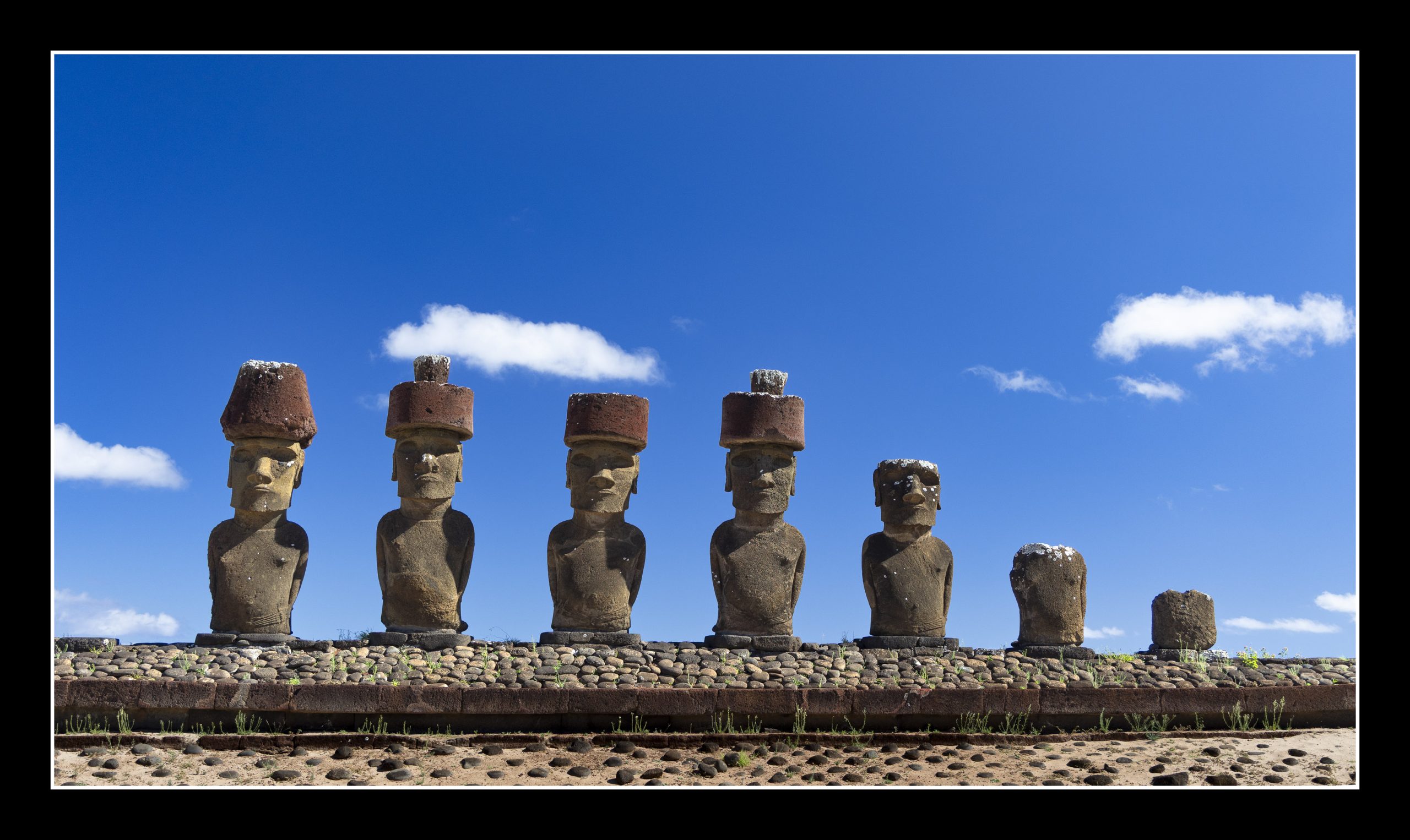
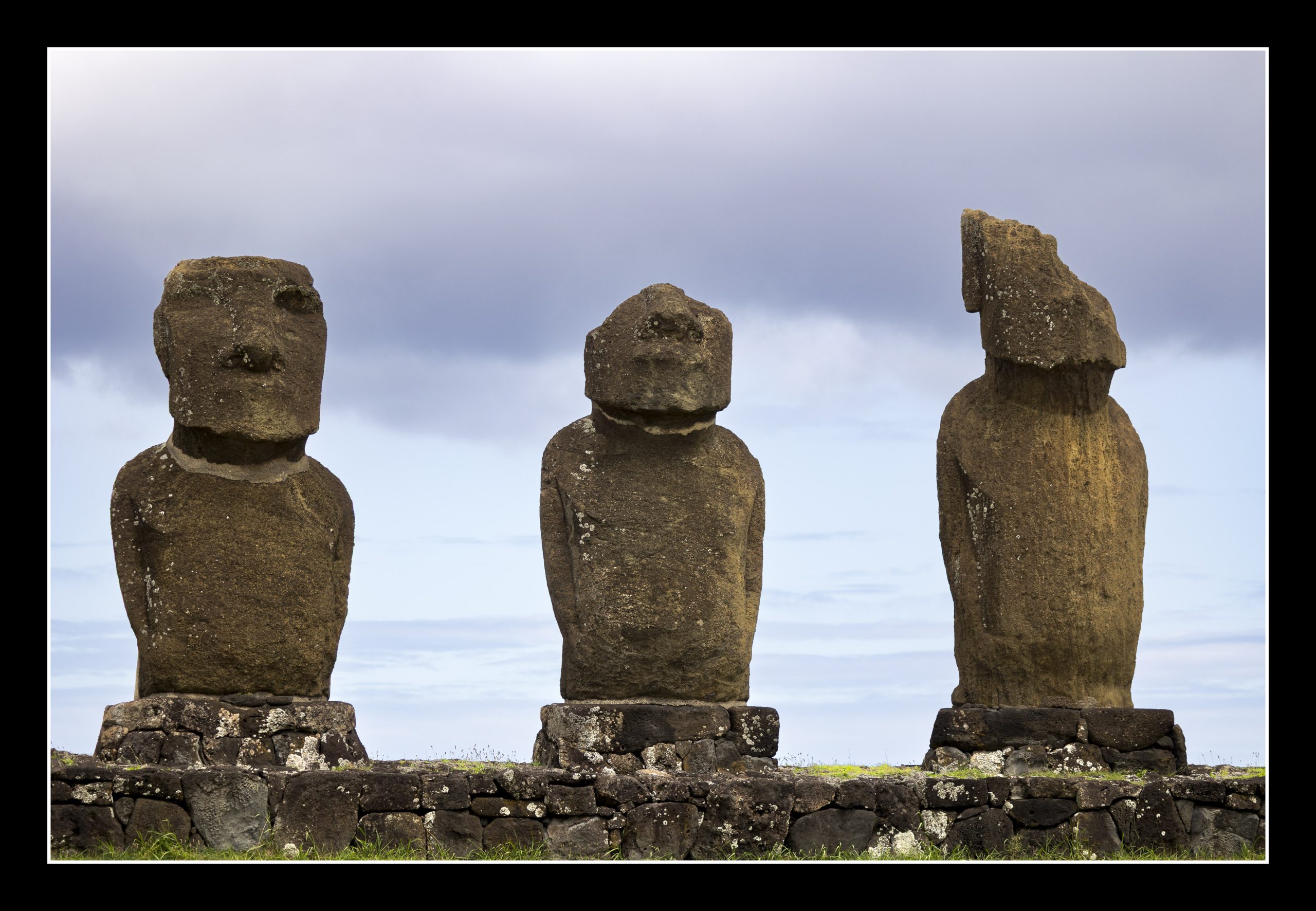
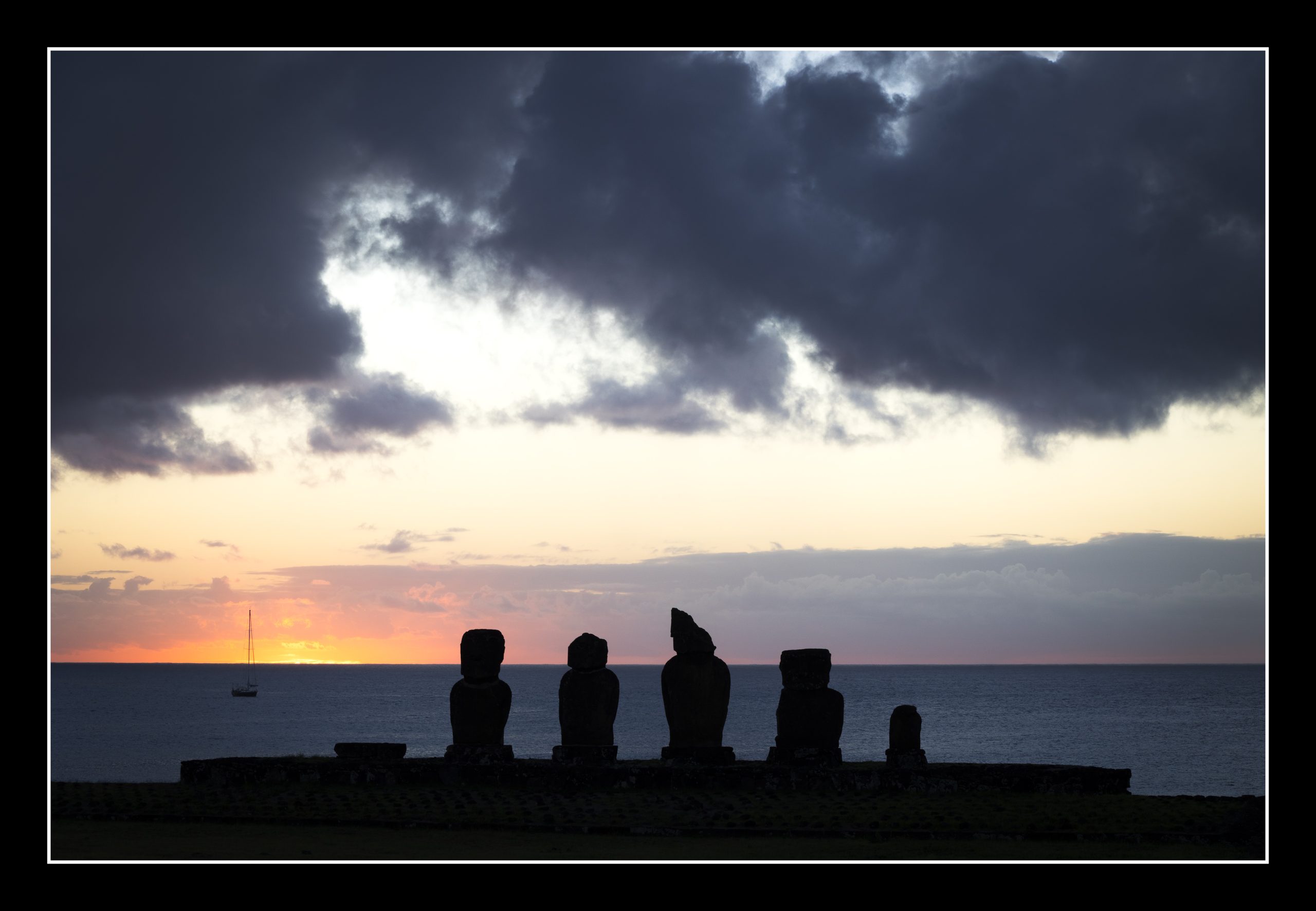
The stone heads for which Rapa Nui is famous are called moai (mo-eye). They date from around 1250 to 1500. Initially the moai were part of a tradition of ancestor worship. Over the years some of that tradition was bastardized as the size of the head became important as a sign of wealth an power. This meant that more people were required to work on larger moai. As island resources were depleted and workers became increasingly dissatisfied the birdman cult was established. That was the dominant cultural force when the first recorded European contact with the island occurred on Easter Sunday April 5, 1722, by Dutch navigator Jacob Roggeveen.
Then came smallpox, slavers, and starvation. “According to a 1892 census there were only 101 Rapa Nui alive, of which only 12 were adult men. The Rapa Nui ethnic group, along with their culture, was at its closest point to extinction.” (2)
“On September 9, 1888, thanks to the efforts of the Bishop of Tahiti, Monsignor José María Verdier, the Agreement of Wills (Acuerdo de Voluntades) was signed, in which the local representative Atamu Tekena, head of the Council of Rapanui Chiefs ceded the sovereignty of the island to the State of Chile, represented by Policarpo Toro. The Rapa Nui elders ceded sovereignty, without renouncing their titles as chiefs, the ownership of their lands, the validity of their culture and traditions and on equal terms. The Rapa Nui sold nothing, they were integrated in equal conditions to Chile.”(2)
Moai
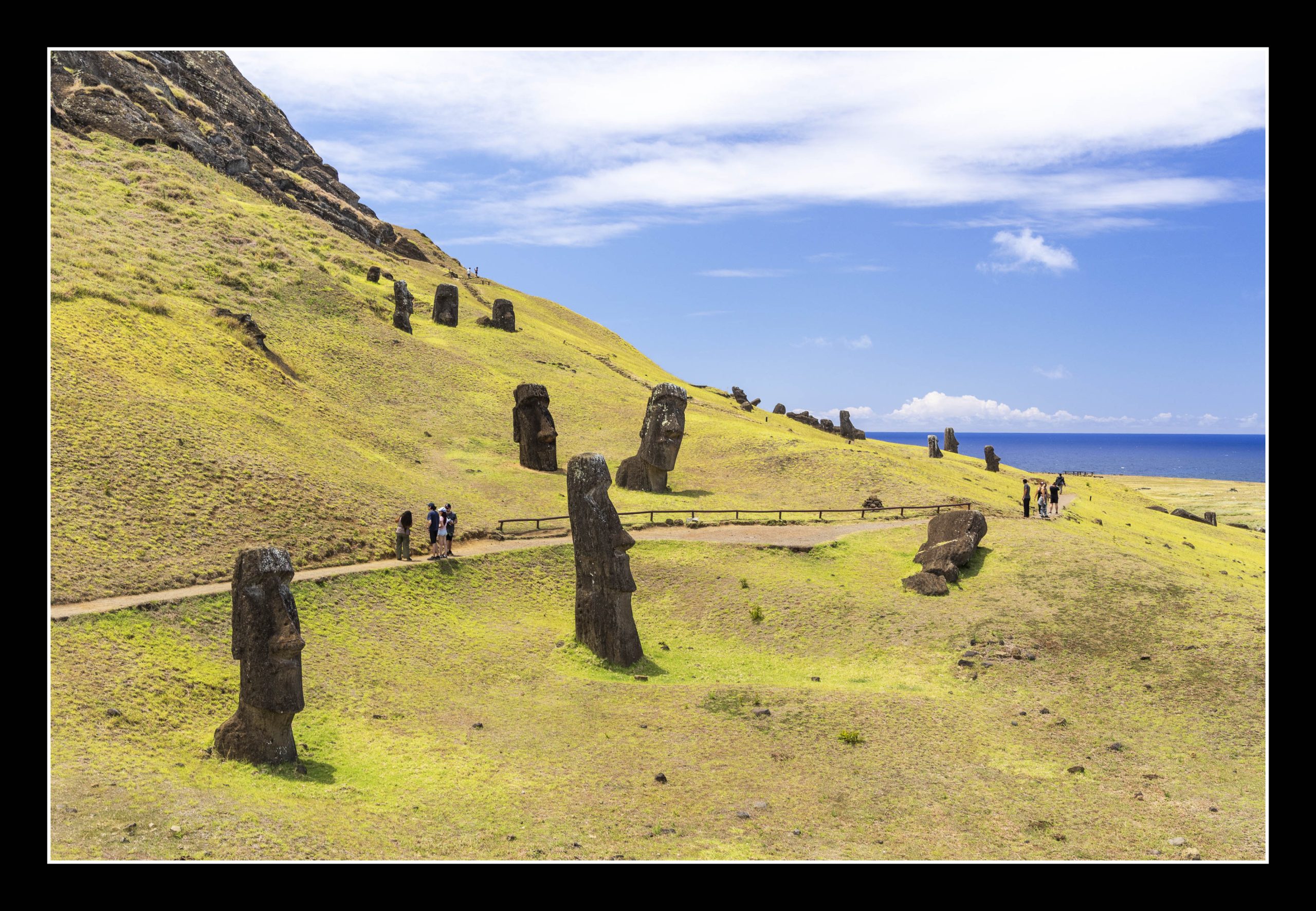
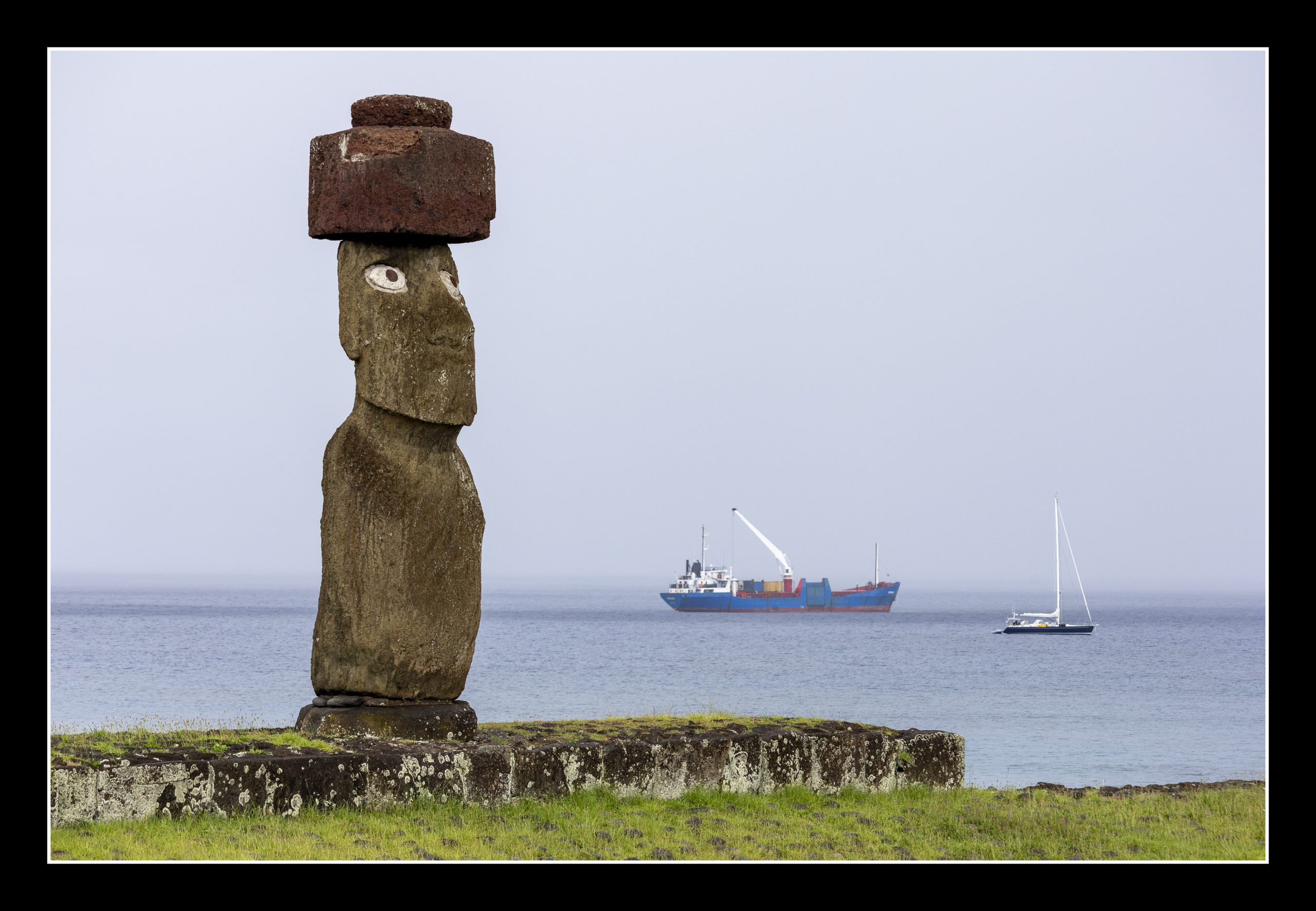
A complete moai has the familiar body and head, a hat, and white coral eyes with obsidian pupils. When all those elements are present the moai is a “living face”.
All the moai statues on the island came from a single quarry that could be thought of as something like a store. The quarry had its own workforce and would create moai on spec. In this case, when a chief died, family / tribe / clan members would go to the quarry and choose a moai from those that had already been sculpted. Wealthier families / tribes / clans would go to the quarry and request a moai with particular features be sculpted. There is no definitive answer to how the moai were transported.
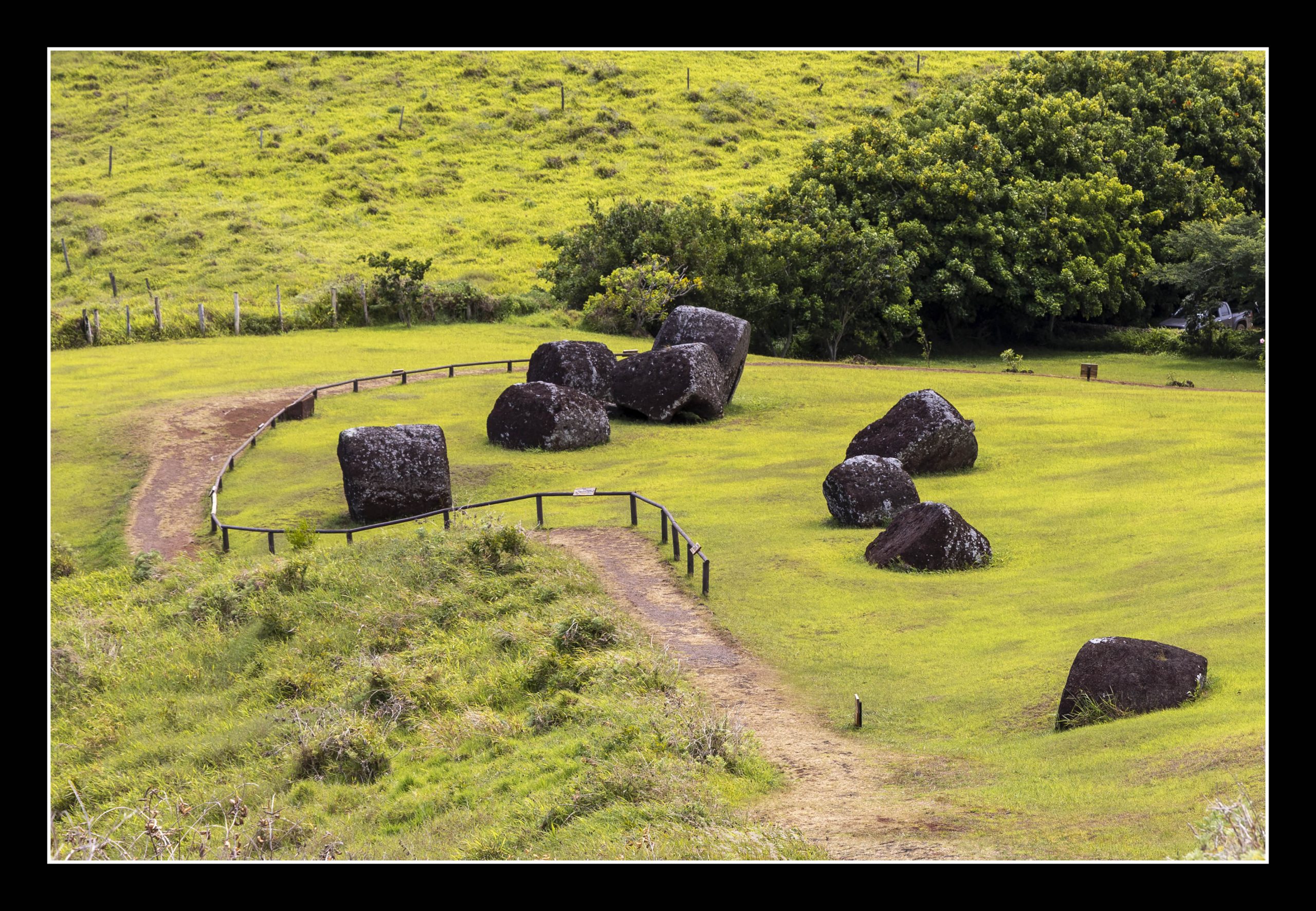
All the moai hats are made of a red stone and came from the same quarry, which is different from the one for the heads. According to our guide who was born on Rapa Nui and is steeped in Polynesian cultural traditions, the hat adds the feminine element to the masculine head and therefore makes the moai whole.
Notes on Photos
~ 00 – Rapa Nui looking from one corner of the triangle to other two with Hanga Roa centre left
~ 01 – The hat quarry
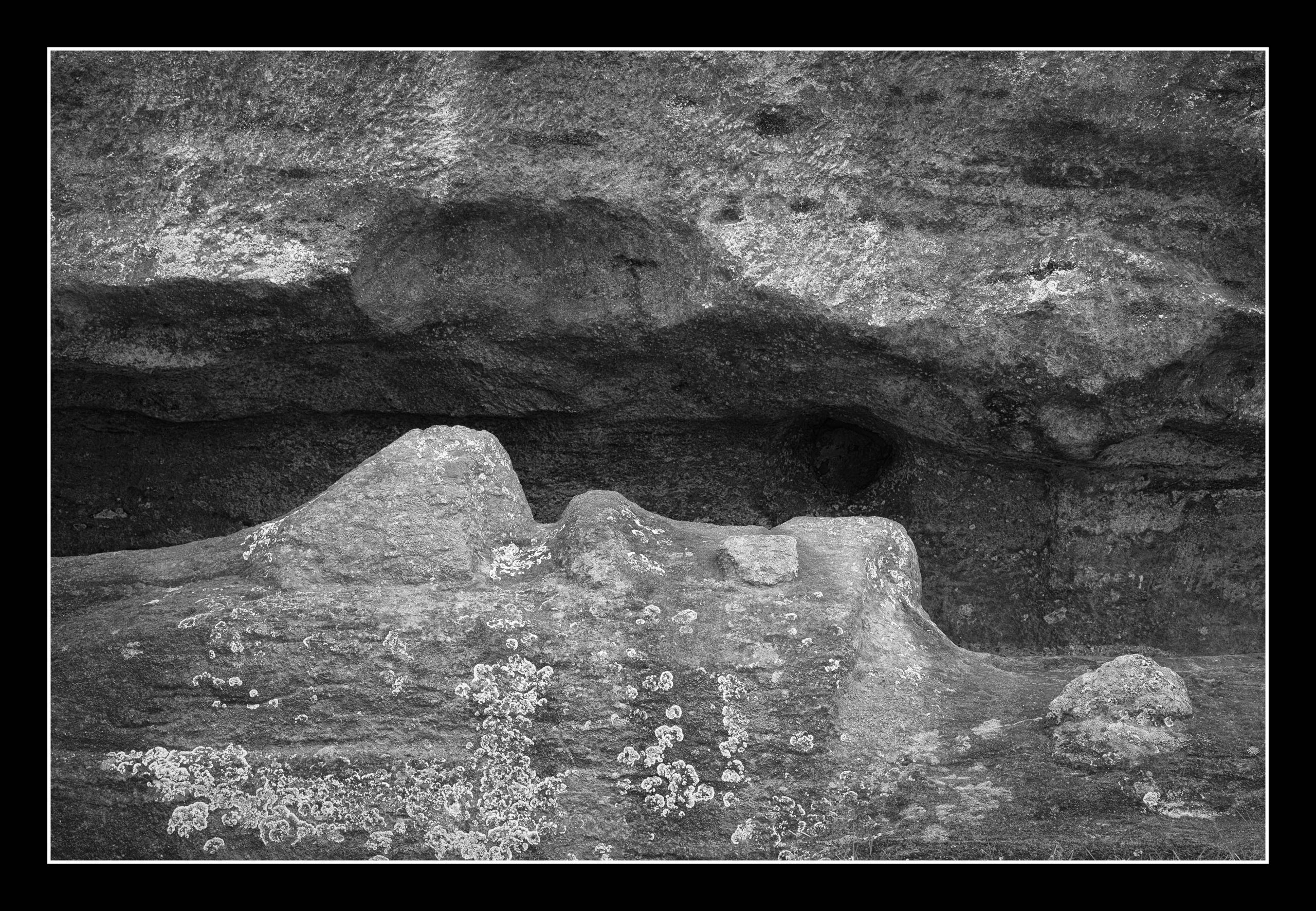
~ 02 to 06 – At the head and body quarry
~ 03 – Unfinished prone figure before it has been freed from the rock
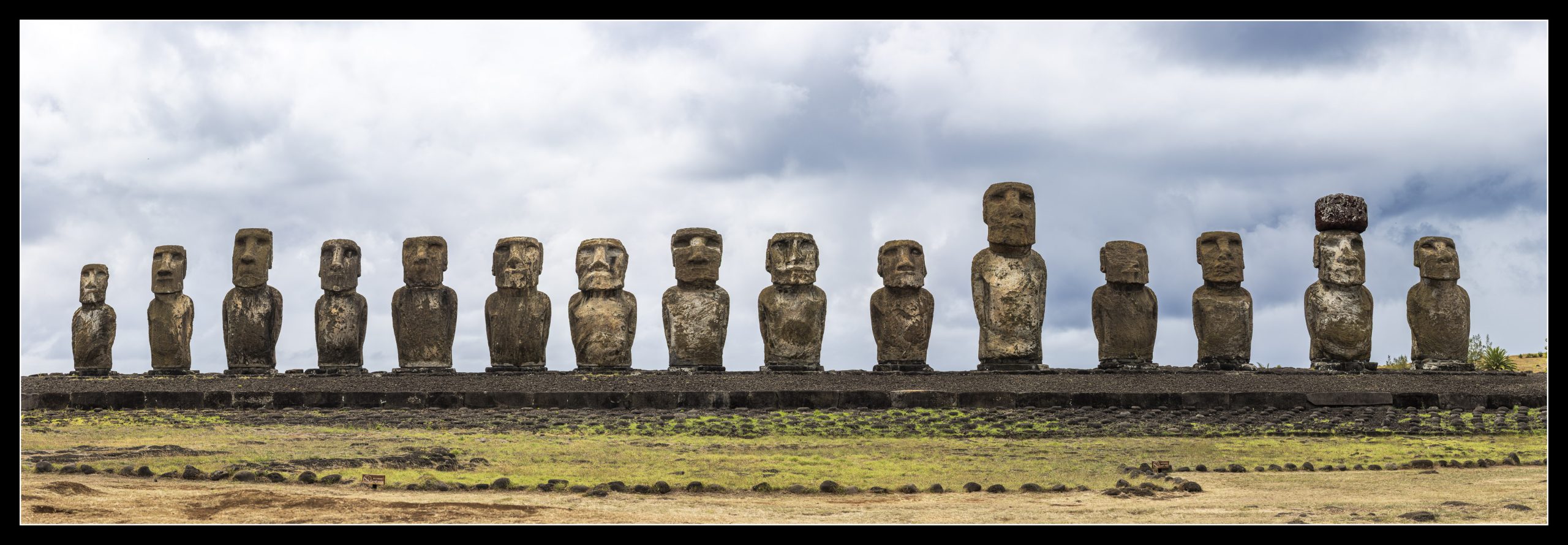
~ 07 to 12 – Various moai around the island – all these moai were initially found lying down.
~ 07 – The eyes on this moai are not original.
~ 11 – This panorama and would print at approximately 140 cm x 48 cm (55″ x 19″)
Footnotes
~ (1) – https://en.wikipedia.org/wiki/H%C5%8Dk%C5%ABle%CA%BBa
~ (2) – https://en.wikipedia.org/wiki/Easter_Island
~ https://en.wikipedia.org/wiki/Moai
You are welcome to share a link to this page with others.
As always, all comments are welcome and sought.
Cheers, Sean
My note on privacy can be found under the “About” menu item, and if you would like to subscribe to this blog please enter your email.
.
All rights for all material on any and all media and technologies reserved – © Sean P Drysdale 2017-2026