Dear Reader (2025-12-09 – published simultaneously to FB)
Many weeks you and I began this tour of Algeria with a beverage post. It is therefore fitting the Algeria series ends with a beverage post in five sections.
Islam
Please ignore this section if you are a religious zealot or fundamentalist of any stripe. Also please note that I am just a wanderer trying to make sense of the corners of the world I have the privilege of living in and visiting. This section is inspired by a heated conversation between a local guide and a tour guide that my fellow travelers and I witnessed.
Looking back at Christianity, it is obvious that for many centuries the foundations of charity, generosity, and kindness to all have been twisted beyond recognition. Adding to this, there is is a myriad of interpretations of the Bible primarily by men to support any number of historical and current violent and / or bloody power structures. In other words, though the core of Christianity may have kind and peaceful aspirations, there are many incarnations of Christianity that are cruel and violent. When it comes to Islam I have never had enough information to resolve “Islam is a peaceful religion” and the violence done in the name of Islam. On this trip I began to wrap my head around this conflict.
The primary sacred text of Islam is the Quran, which was delivered in verses over about 23 years to Mohamed. Before Mohamed received the Quran, he was a respected man of the community. It was that position that provided the initial credibility for him to be heard. As time progressed Mohamed was accompanied by scribes who would record the verses as they were revealed to Mohamed. There is also a secondary sacred text called the hadith which “refers to the Islamic oral tradition of anecdotes containing the purported words, actions, and the silent approvals of the Islamic prophet Muhammad or his immediate circle (companions in Sunni Islam, Ahl al-Bayt in Shiite Islam).” (2)
“Each hadith is associated with a chain of narrators (isnad), a lineage of people who reportedly heard and repeated the hadith from which the source of the hadith can be traced. The authentication of hadith became a significant discipline, focusing on the isnad (chain of narrators) and matn (main text of the report). This process aimed to address contradictions and questionable statements within certain narrations. Beginning one or two centuries after Muhammad’s death, Islamic scholars, known as muhaddiths, compiled hadith into distinct collections that survive in the historical works of writers from the second and third centuries of the Muslim era (c. 700−1000 CE).” (2)
Within Islam there is a broad range of weights placed on the importance of The Hadith. Some Muslims, such as the Quranists, reject the Hadith entirely. These Muslims “assert that Islamic guidance should rely solely on the Quran.” (2)
Just as the words of the Bible have been used to support any number of crimes against humanity, there are people, organizations, and power structures who have used the hadith to support their own agendas. So in my grossly simplified and possibly naive view of Islam I can now see how the Quran as a peaceful code exists, and how interpretations of the Quran via the hadith have contributed to violent fundamentalism.
Calligraphy
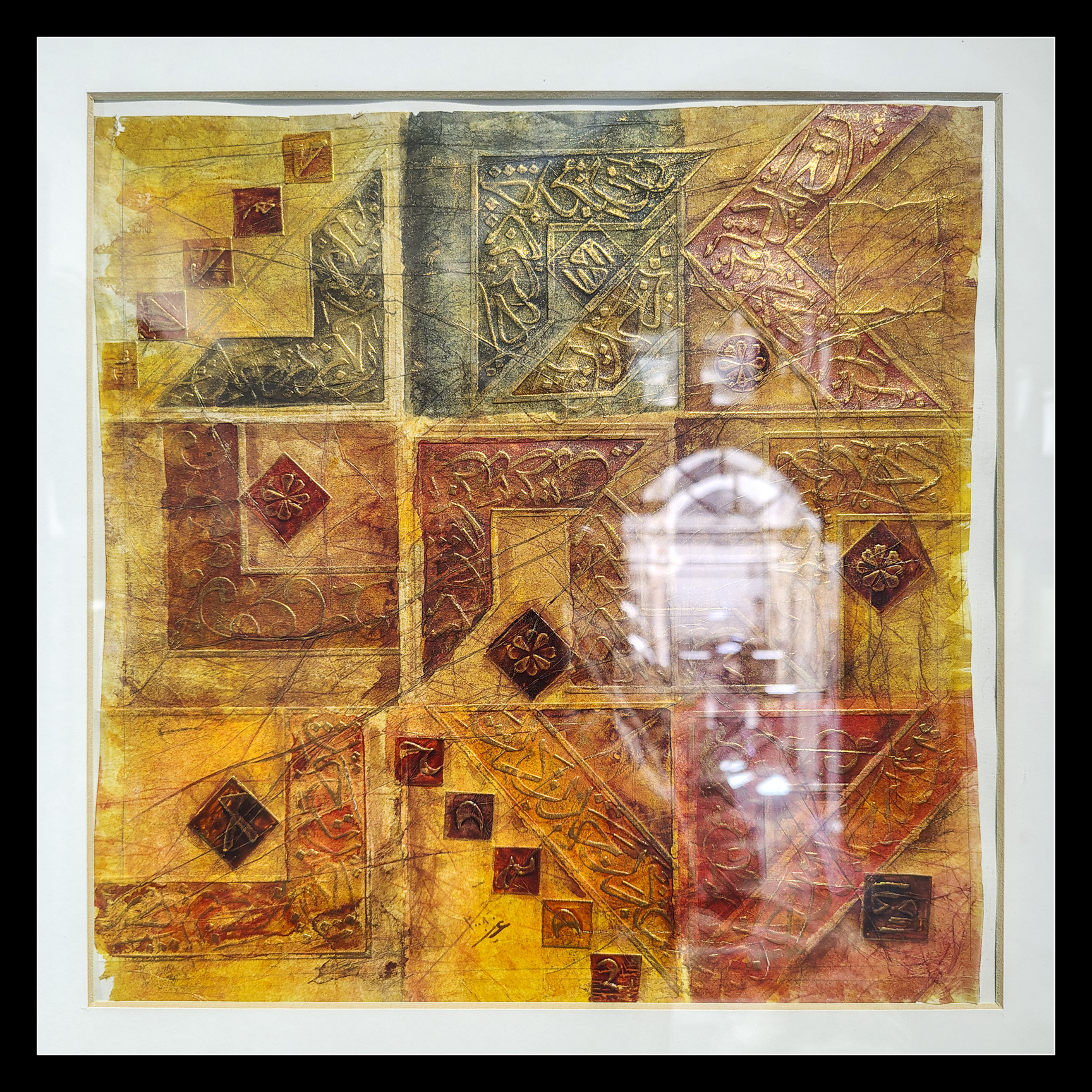
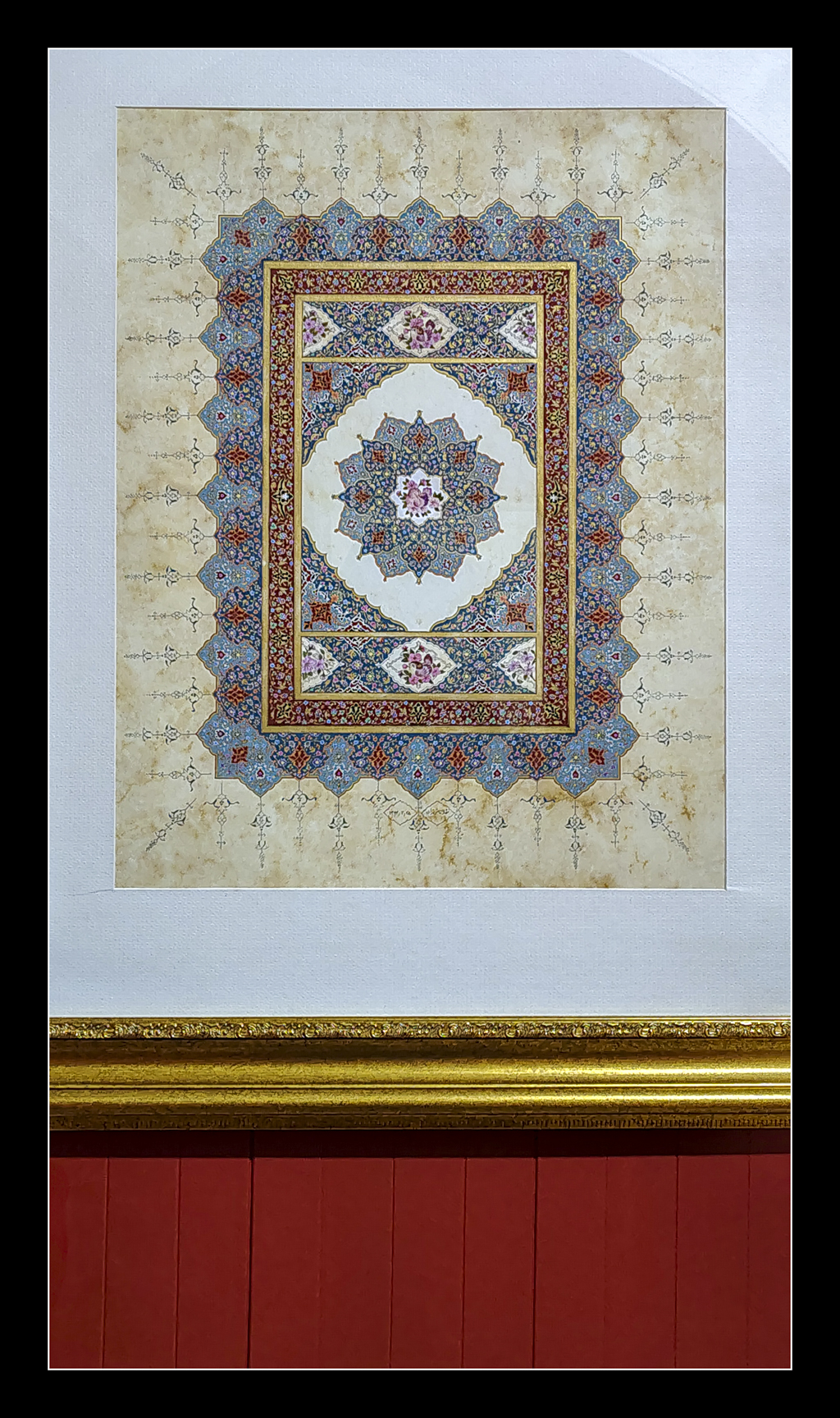
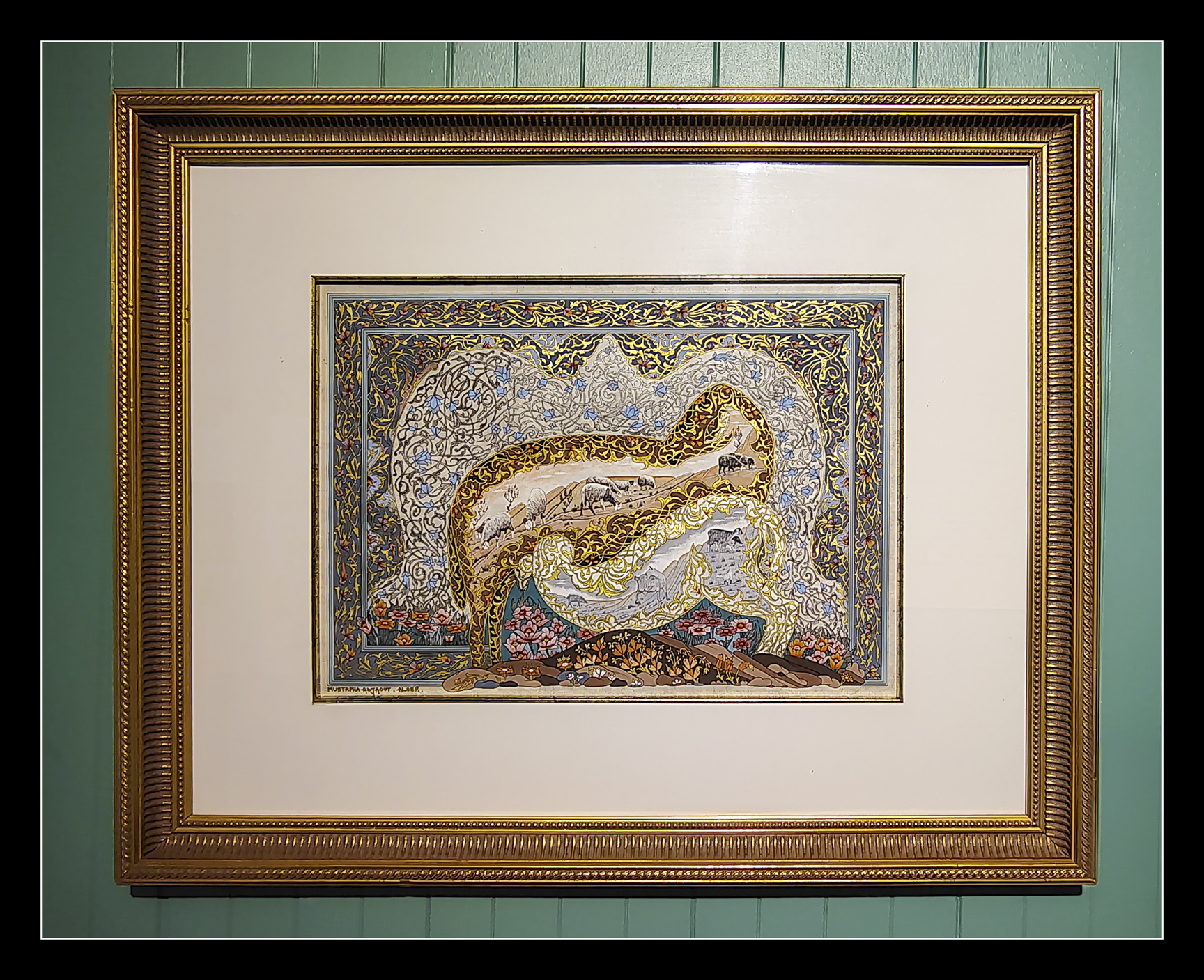
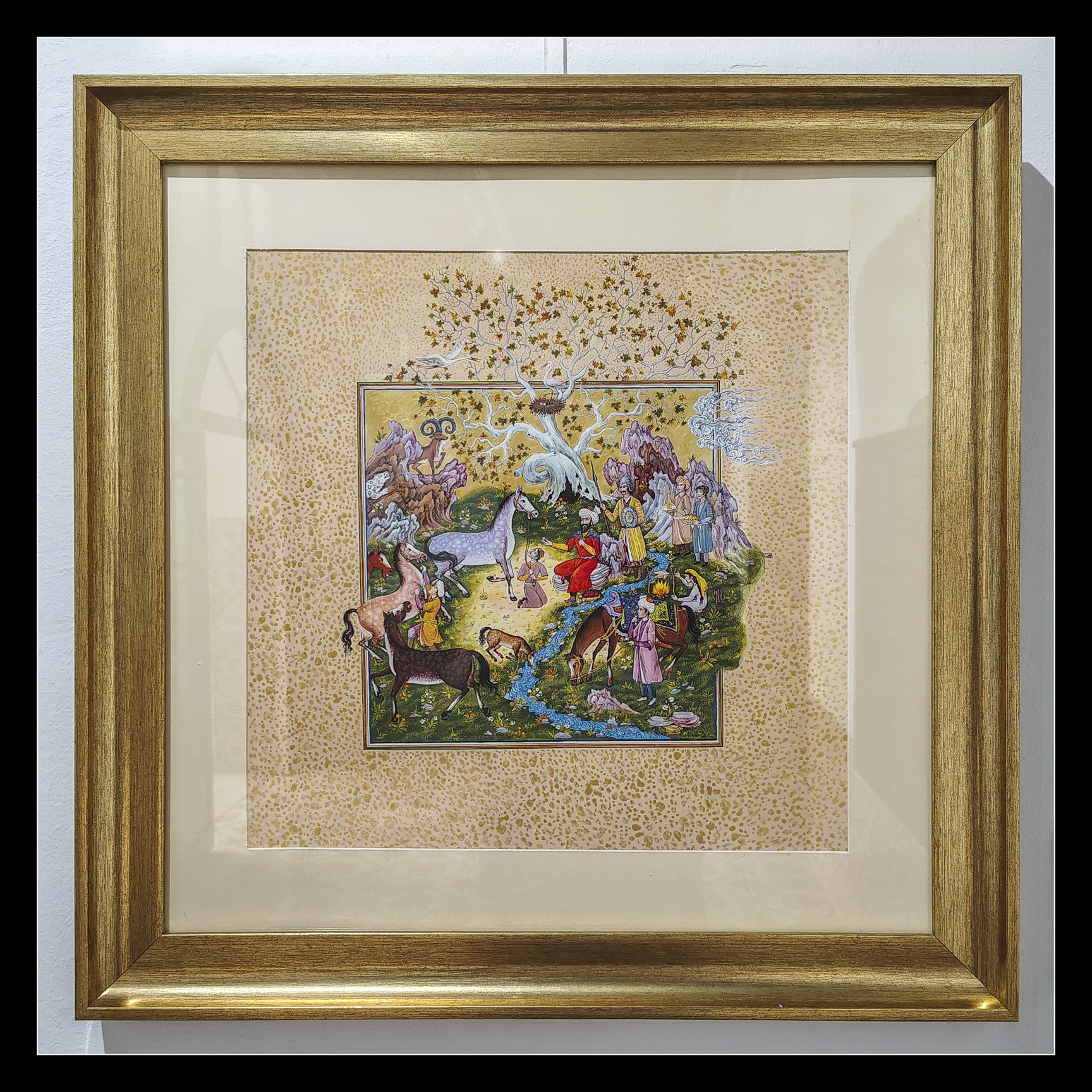
From what I could surmise the only contemporary fine art that appears prevalent is Calligraphy.
“Arabic calligraphy, also called Islamic calligraphy, is form of writing which has become an important traditional art form in the Calligraphers designs using arabic script. Arabic calligraphy is covering more than a thousand years, it encompassed a vast geographical area: from the Iberian Peninsula in the west, to Southeast Asia and China in the east. Calligraphy plays a vital role in the design of both religious and everyday arts and crafts, as well as in developing a distinctive visual culture inspired by Islam. Major calligraphy styles such as Kufic, Naskh, Thuluth, Muhaqqaq, Rayhani, Tawqi, Riqa’, Nasta’liq, Diwani, and Maghribi scripts were developed over the years by prominent exponents and were used as ornament in works of art, glorifying the Word of God. Contemporary calligraphers continue to explore new realms of writing, bringing the light of inspiration and imagination to the paramount visual expression of Islamic culture.” (3)
A Diary Entry
Just so you and I are clear that travelling like has good hours and bad hours, here is one of my diary entries near the beginning of the second tour.
The days are taking on a rhythm. Unfortunately I am fighting a cold, and I’m way off my enthusiastic curious game. If I was home I would be flat on my back on the purple couch drifting between sleep and incomprehensible TV. So, my Algerian desert experience is coloured by being tired and hot. I’m not feeling like eating much, and I don’t trust my insides despite the tablets of Imodium. Just to complete this wine I’m tired, sick, and probably undernourished. On the other hand I’m well hydrated. Bottles of water are plentiful from the kitchen truck.
Reflections
~ I am very glad that I had the opportunity to spend as much time as I did in Algeria. It is a large complex place with a complex history. Once you leave the Mediterranean coast a guide is required. Outside of the Mediterranean it is a country that is difficult to access to all but the most intrepid of independent travellers. There are buses south of the Atlas. I got the impression though that the schedule for these buses was vague at best.
~ Though I did feel uncomfortable at times, I never felt unsafe. I also did not go walking alone at night.
~ If a beer at the end of the day is important to you this is the wrong country to visit.
~ The desert is both beautiful and is, in places, ugly with litter.
~ As I mentioned in my first post Algerians have way of watching without looking. They are also a very welcoming people, and appear to enjoy having visitors.
~ Not bad for a camera phone 🙂
~ I loved the desert, and that would be the one thing in Algeria that I could return to but probably won’t as there so many other sparkly things out there, including other deserts.
Closing
Thank you for visiting and especially thank you to those who have stayed with this series for all 26 posts and approximately 300 images. I enjoy creating these travelographies and sharing them with you. Though they are incomplete, they help me to solidify the memories of people, places, events and histories.
Footnotes and References
~ (1) – https://en.wikipedia.org/wiki/Quran
~ (2) – https://en.wikipedia.org/wiki/Hadith
~ (3) – from a poster at a Calligraphy Exhibition
You are welcome to share a link to this page with others.
As always, all comments are welcome and sought.
Cheers, Sean
My note on privacy can be found under the “About” menu item, and if you would like to subscribe to this blog please enter your email.
.
All rights for all material on any and all media and technologies reserved – © Sean P Drysdale 2017-2026